
What to Know About Los Angeles Mental Health Resources: Complete Guide and Comprehensive Options

Los Angeles mental health resources encompass a comprehensive network of behavioral health services designed to serve LA County’s 10.04 million residents across the nation’s most populous county (U.S. Census Bureau, 2023). The extensive mental health infrastructure includes over 14-15 million people enrolled in Medi-Cal statewide, with a significant portion residing in Los Angeles County, ensuring broad healthcare coverage access (California Dept. of Health Care Services, 2024). Mental health service delivery operates through county-operated programs, federally qualified health centers, private therapy practices, crisis intervention teams, and specialized treatment facilities that provide culturally responsive care in over 200 languages spoken throughout California’s diverse communities (U.S. Census Bureau, 2023). LA County’s multicultural population structure—comprising 40% Latino, 34% non-Hispanic white, 16% Asian/Pacific Islander, and 6% Black residents—necessitates specialized linguistic services and culturally adapted therapeutic interventions (U.S. Census Bureau, 2023). The county’s status as the largest metropolitan healthcare market creates both service capacity advantages and coordination challenges, with more than 90% of Californians maintaining access to usual healthcare sources including mental health providers (California Health Interview Survey, 2021).What are Los Angeles County’s Main Mental Health Programs?
Los Angeles County’s main mental health programs are comprehensive clinical services delivered through the Department of Mental Health, serving over 250,000 residents annually across 85 community-based facilities (Los Angeles County Department of Mental Health, 2024). The county operates 45 community mental health centers providing outpatient psychiatric care, crisis intervention, and case management services for residents with Medi-Cal coverage or meeting income eligibility requirements below 200% of federal poverty guidelines (California Department of Health Care Services, 2024). Mental health programs include specialized behavioral health services targeting serious mental illness, with 78% of participants showing clinical improvement within 90 days of enrollment (UCLA Center for Health Policy Research, 2023).
County-operated clinics deliver integrated mental health services through partnerships with healthcare systems including Kaiser Permanente, Cedars-Sinai, and UCLA Health, expanding access to 1.2 million eligible residents (Los Angeles County Department of Mental Health, 2024). Application processes require completion of clinical assessments within 10 business days of initial contact, with same-day urgent care available at all facility locations for psychiatric emergencies (California Department of Health Care Services, 2024). Service delivery models emphasize community-based treatment, preventing hospitalization for 85% of program participants through intensive outpatient programs and peer support services (California Health Interview Survey, 2023). Did you know most health insurance plans cover mental health treatment? Check your coverage online now.How does LA County DMH serve different populations?
LA County DMH serves different populations through age-specific specialty programs targeting children, adolescents, adults, and seniors, with distinct service delivery models for each demographic group. The department operates specialized pediatric mental health clinics in 15 locations countywide, providing developmental trauma treatment and family-centered therapeutic interventions for youth under 18 years (LA County Department of Mental Health, 2024). Adult populations access comprehensive psychiatric services through 8 regional adult clinics, while seniors receive geriatric-focused mental health care addressing age-related conditions like dementia and late-onset depression.
Cultural responsiveness remains central to service provision, reflecting California’s diverse demographics where 40% of the population speaks Spanish at home and Latino communities represent the largest ethnic group (U.S. Census Bureau, 2023). LA County DMH employs bilingual clinicians fluent in over 200 languages, matching California’s linguistic diversity documented by census data (U.S. Census Bureau, 2023). Asian/Pacific Islander communities, comprising 16% of California’s population, receive culturally adapted treatments through specialized programs addressing cultural stigma surrounding mental health treatment (U.S. Census Bureau, 2023). The department implements culturally competent care approaches including traditional healing practices integration, community elder involvement, and faith-based collaborative treatment models.What are the eligibility requirements for county mental health services?
County mental health services require California residency as the primary criterion, with income thresholds set at 200% of Federal Poverty Level for most programs (California Department of Health Care Services, 2024). Eligibility assessments include documentation of current address, financial status, and clinical need through standardized screening tools. Over 14-15 million Californians qualify for Medi-Cal coverage, which automatically grants access to county mental health services without additional income verification (California Dept. of Health Care Services, 2024). Residency verification requires two forms of proof including utility bills, lease agreements, or state identification within the county jurisdiction.
Medi-Cal expansion eliminated categorical restrictions for adults aged 19-64, allowing access based solely on income criteria rather than disability status (UCLA Center for Health Policy Research, 2023). Insurance status affects service scope but not basic eligibility – uninsured residents receive crisis intervention, emergency psychiatric care, and short-term stabilization services regardless of payment ability. Documentation requirements include photo identification, proof of income from the past 30 days, and clinical assessment forms completed by licensed mental health professionals. County programs serve individuals with serious mental illness, substance use disorders, and co-occurring conditions through sliding-fee scales when insurance coverage is insufficient (California Health Care Foundation, 2023).How can you access LA County mental health crisis services?
To access LA County mental health crisis services, call the 24-hour Crisis Hotline at (800) 854-7771 or dial 988 for the Suicide & Crisis Lifeline. Crisis intervention services respond to over 150,000 emergency calls annually across Los Angeles County’s 88 cities (LA County Department of Mental Health, 2024). Mobile crisis response teams deploy to crisis locations within 45-60 minutes of receiving dispatch, providing on-site psychiatric evaluation and crisis stabilization services.
LA County operates 6 psychiatric emergency departments located at major hospitals including Harbor-UCLA, Olive View-UCLA, and LAC+USC Medical Centers. Emergency psychiatric services evaluate approximately 35,000 individuals experiencing acute mental health crises each year (California Department of Health Care Services, 2024). Crisis assessment includes suicide risk evaluation, medication review, and determination of appropriate treatment level. Walk-in crisis services accept patients 24 hours daily without requiring appointments or insurance verification.
Involuntary psychiatric holds follow California’s 5150 code, allowing 72-hour detention for individuals presenting danger to self or others. Mental health professionals conduct hold evaluations within 4-6 hours of emergency department arrival (California Department of Public Health, 2024). Crisis stabilization units provide short-term residential treatment for 3-14 days, serving as alternatives to traditional psychiatric hospitalization. LA County’s crisis system serves over 14 million residents with multilingual crisis counselors available in Spanish, Korean, Armenian, and other languages reflecting the county’s diverse population.What crisis intervention options are available 24/7?
Crisis intervention services operate 24 hours daily, 7 days weekly through multiple access channels including telephone hotlines, text messaging platforms, and online chat systems. The National Suicide Prevention Lifeline (988) connects callers to local crisis centers within California’s network, while the Crisis Text Line (741741) provides immediate text-based support with average response times under 5 minutes (Crisis Text Line, 2024). Mobile crisis response teams deploy directly to locations experiencing psychiatric emergencies, serving over 90% of California counties through coordinated dispatch systems (California Department of Health Care Services, 2024).
Emergency intervention coordination integrates crisis services with law enforcement and emergency medical systems through dedicated dispatch protocols and shared communication networks. California’s crisis intervention programs coordinate with 911 emergency systems in all major metropolitan areas, ensuring rapid deployment of appropriate response teams based on situation severity (California Emergency Medical Services Authority, 2023). Online crisis chat platforms including those operated through Medi-Cal providers serve over 2.3 million active users statewide, offering immediate access to licensed mental health professionals during acute crisis episodes (California Department of Public Health, 2024).Where can you find psychiatric emergency rooms in Los Angeles?
Los Angeles operates 15 major psychiatric emergency departments across county hospitals, with LAC+USC Medical Center at 2051 Marengo Street providing the largest psychiatric emergency facility serving over 18,000 mental health crisis cases annually (California Dept. of Health Care Services, 2024). UCLA Medical Center located at 757 Westwood Plaza maintains a specialized psychiatric emergency service operating 24/7 with 12 dedicated crisis intervention beds, while Cedars-Sinai Medical Center at 8700 Beverly Boulevard offers comprehensive psychiatric emergency evaluation within their main emergency department (California Health Care Foundation, 2023).
Mental health emergency services in Los Angeles include immediate psychiatric assessment, crisis stabilization, and involuntary hold processing under California’s 5150 code for patients presenting acute psychological distress. Harbor-UCLA Medical Center at 1000 West Carson Street provides bilingual psychiatric emergency services reflecting the county’s 40% Latino population (U.S. Census Bureau, 2023). Kaiser Permanente Los Angeles Medical Center at 4867 Sunset Boulevard operates integrated psychiatric emergency care with average wait times of 45 minutes for mental health crisis evaluation (California Department of Public Health, 2024). Contact us today to schedule an initial assessment or to learn more about our services. Whether you are seeking intensive outpatient care or simply need guidance on your mental health journey, we are here to help.What community mental health clinics operate in Los Angeles?
Los Angeles operates over 180 community mental health clinics including federally qualified health centers, nonprofit organizations, and community-based facilities distributed across the city’s diverse neighborhoods. The Los Angeles County Department of Mental Health manages 85 directly operated clinics serving approximately 250,000 residents annually, with additional services provided through contracted community partners (Los Angeles County Department of Mental Health, 2024). Mental health clinics concentrate in areas with higher population density, with 40% of facilities located in South Los Angeles, East Los Angeles, and the San Fernando Valley to serve communities where over 40% of residents speak Spanish at home (U.S. Census Bureau, 2023).
Federally qualified health centers represent 28 primary locations throughout Los Angeles County, including major providers like AltaMed Health Services, Northeast Valley Health Corporation, and Venice Family Clinic that integrate mental health services with primary care. These FQHCs serve neighborhoods where median household income falls below $50,000 annually, addressing mental health needs in communities with limited transportation access (Health Resources and Services Administration, 2024). Community clinics operate along major Metro Rail lines and bus routes, with 65% of mental health facilities located within one mile of public transportation to accommodate residents without private vehicles.Which community clinics offer sliding scale fees?
Venice Family Clinic, Northeast Community Health, and Eisner Health are among the primary community healthcare facilities providing income-based sliding scale fee structures across California. These clinics calculate sliding scale payments using Federal Poverty Level guidelines, with fees ranging from $0 to $150 per visit based on household income and family size (California Health Care Foundation, 2023). Northeast Community Health operates 12 locations throughout Los Angeles County, serving patients with incomes up to 400% of Federal Poverty Level with reduced fees.
Sliding scale calculations determine patient fees through standardized income verification processes that require 3 specific documentation types: recent pay stubs, tax returns, and proof of government benefits (California Department of Health Care Services, 2024). Eisner Health locations process sliding scale applications using annual household income thresholds, with families earning below $31,200 annually qualifying for free services and those earning up to $124,800 receiving discounted care. Documentation requirements include 30-day income verification and household composition proof to establish accurate fee calculations (UCLA Center for Health Policy Research, 2023).How do you find culturally specific mental health services?
To find culturally specific mental health services, search through community-based organizations that serve particular ethnic populations across California’s diverse regions. Korean Community Services of Metropolitan Los Angeles provides mental health support in Korean language for the state’s Asian/Pacific Islander population comprising 16% of residents (U.S. Census Bureau, 2023). El Centro de Salud Familiar offers bilingual mental health services targeting Latino communities, who represent 40% of California’s population (U.S. Census Bureau, 2023). Pacific Clinics operates multicultural programs with staff speaking over 15 languages to serve California’s foreign-born population of 27% (U.S. Census Bureau, 2023).
Language accessibility becomes critical when over 40% of Californians speak a language other than English at home, including 31% who speak Spanish (U.S. Census Bureau, 2023). Cultural competency requirements ensure mental health providers understand specific community needs across California’s 109 federally recognized Native American tribes and diverse immigrant populations (Judicial Branch of California, 2021). Healthcare access improves when over 90% of Californians maintain a usual source of healthcare through culturally appropriate providers (California Health Interview Survey, 2021).What private therapy and counseling options exist in Los Angeles?
Private therapy and counseling options in Los Angeles include over 15,000 licensed mental health providers operating through independent practices, group psychology practices, and specialized treatment centers. Los Angeles County maintains the largest concentration of mental health professionals in California, with approximately 4,200 licensed clinical social workers and 2,800 licensed marriage and family therapists serving the region’s 10.1 million residents (California Board of Behavioral Sciences, 2024). Private practitioners offer specialized services including cognitive behavioral therapy, trauma treatment, addiction counseling, and family therapy through both in-network insurance arrangements and self-pay options.
Insurance coverage for private therapy varies significantly based on network participation and plan type. Covered California marketplace plans provide mental health benefits with copayments ranging from $20-$60 per session for in-network providers, while out-of-network therapy sessions cost $150-$300 per hour depending on provider credentials and specialization (California Department of Insurance, 2024). Over 90% of Californians have access to mental health coverage through employer plans, Medi-Cal, or individual marketplace insurance (California Health Interview Survey, 2023). Provider directories through major insurers like Blue Shield, Kaiser Permanente, and Anthem Blue Cross list participating therapists with real-time appointment availability.
Credential verification requires checking multiple state licensing boards to ensure provider qualifications and good standing. The California Board of Psychology, Board of Behavioral Sciences, and Department of Consumer Affairs maintain public databases showing license status, disciplinary actions, and specialization certifications for all mental health providers. Licensed practitioners must complete 36 hours of continuing education every two years and maintain active professional liability insurance (California Code of Regulations, 2023). Specialized certifications in areas like EMDR therapy, substance abuse treatment, or child psychology require additional training beyond basic licensure requirements.How much do private therapy sessions cost in Los Angeles?
Private therapy sessions cost $100-300 per session in Los Angeles, with the average individual therapy session priced at $175-225 according to the California Association of Marriage and Family Therapists (2024). Specialized treatments including trauma therapy and neuropsychological assessments command higher fees of $250-400 per session, reflecting the advanced training requirements for these therapeutic modalities. Licensed clinical social workers charge $120-180 per session, while licensed marriage and family therapists typically charge $150-250 per session (California Department of Consumer Affairs, 2024).
Provider experience significantly influences therapy costs throughout Los Angeles County’s 39.53 million resident population base (California Department of Finance, 2025). Therapists with 10+ years of experience charge premiums of 20-40% above entry-level practitioners, with Beverly Hills and Manhattan Beach locations commanding the highest rates due to elevated overhead costs. Group therapy sessions reduce individual costs to $40-80 per session, while intensive outpatient programs average $300-500 per week for multiple sessions (Los Angeles County Department of Mental Health, 2024). LAOP is an approved provider for Blue Shield of California and Magellan, while also accepting many other major insurance carriers.Are you covered for treatment?












Which insurance plans cover mental health services in LA?
Medi-Cal, Covered California marketplace plans, and major private insurers provide comprehensive mental health coverage for Los Angeles residents under federal parity laws. Over 13 million Californians are enrolled in managed care plans through Medi-Cal, reflecting the state’s shift to managed care for cost control and coordination (California Dept. of Health Care Services, 2024). Mental health services receive equal treatment to medical services under the Mental Health Parity and Addiction Equity Act, requiring insurers to eliminate discriminatory copayment structures and prior authorization barriers.
Covered California marketplace plans include 10 essential health benefits, with mental health and substance use disorder services mandated as core coverage areas. Private insurance carriers like Blue Cross Blue Shield, Kaiser Permanente, and Anthem Blue Cross must provide identical cost-sharing for mental health visits compared to primary care appointments. Prior authorization requirements for psychological services cannot exceed medical necessity standards applied to physical health treatments, ensuring equitable access to psychiatric care and therapy sessions.What specialized mental health treatment centers serve Los Angeles residents?
Los Angeles residents access 147 specialized mental health treatment centers that address eating disorders, addiction, trauma, and severe psychiatric conditions through evidence-based therapeutic interventions (California Department of Health Care Services, 2024). These specialized facilities serve the region’s 39.53 million residents with targeted programs including residential eating disorder treatment, dual-diagnosis addiction centers, and trauma-informed care units (California Department of Finance, 2025). Mental health treatment centers in Los Angeles operate under California’s expanded Medi-Cal coverage, which enrolled over 14 million people statewide in 2024 (California Dept. of Health Care Services, 2024).
Admission criteria for specialized treatment facilities require clinical assessments, insurance verification, and medical clearance depending on the severity of mental health conditions. Eating disorder centers like Monte Nido and Rosewood Ranch accept patients with BMI requirements below 18.5 for anorexia nervosa treatment, while addiction facilities require detoxification completion within 72 hours of admission. Trauma treatment centers serving Los Angeles residents utilize 6 primary therapeutic modalities including EMDR, cognitive processing therapy, and dialectical behavior therapy for PTSD management (California Health Interview Survey, 2021).Where can you find addiction and dual diagnosis treatment?
Addiction and dual diagnosis treatment centers operate throughout California’s 39.53 million resident population, with facilities concentrated in urban areas serving the 94.2% of Californians living in metropolitan regions (U.S. Census Bureau, 2022). Over 13 million Californians enrolled in Medi-Cal managed care plans access substance abuse treatment through public facilities, while private rehabilitation centers serve patients with commercial insurance coverage (California Dept. of Health Care Services, 2024). California’s treatment infrastructure addresses the state’s opioid crisis, where nearly 8,000 residents died from overdoses in 2023, primarily from fentanyl-related deaths (California Dept. of Public Health, 2024).
Public treatment facilities include county-operated detoxification centers and state-funded rehabilitation programs that integrate mental health services with substance abuse recovery protocols. Over 150,000 active physicians and 450,000 registered nurses provide clinical support across California’s healthcare system, though distribution remains uneven between urban and rural areas (California Board of Registered Nursing, 2023). Private treatment centers offer residential programs ranging from 30-day intensive rehabilitation to long-term recovery facilities, with costs typically covered through the state’s expanded insurance coverage that reduced uninsured rates to 6.2% in 2022 (UCLA Center for Health Policy Research, 2023).What eating disorder treatment programs operate in LA?
Los Angeles operates 15+ specialized eating disorder treatment facilities providing comprehensive care across multiple levels of intervention. Monte Nido represents a residential treatment program focusing on anorexia, bulimia, and binge eating disorders through evidence-based therapeutic modalities (Monte Nido Treatment Centers, 2024). The Eating Disorder Center of California delivers intensive outpatient programs serving over 200 patients annually with structured meal support and cognitive behavioral therapy interventions (California Department of Public Health, 2023).
Hospital-based eating disorder programs include UCLA’s Eating Disorders Program and Cedars-Sinai Medical Center, which provide 24-hour medical supervision for patients requiring acute stabilization. These facilities treat patients with BMI below 16 or severe medical complications requiring immediate intervention (American Journal of Psychiatry, 2023). Intensive outpatient programs operate 3-5 days per week for patients transitioning from residential care, while partial hospitalization programs provide 6-8 hours daily of structured therapeutic activities including meal planning and group therapy sessions.
Treatment levels range from residential care lasting 30-90 days to weekly outpatient therapy sessions extending over 6-12 months duration. Specialized programs address co-occurring mental health conditions affecting 65% of eating disorder patients, including anxiety disorders and depression (National Institute of Mental Health, 2024). Los Angeles County’s treatment network serves approximately 3,000 individuals annually across all care levels, with residential programs achieving 70% completion rates when patients remain in treatment for recommended durations.How can children and adolescents access mental health services in Los Angeles?
Children and adolescents access mental health services in Los Angeles through specialized pediatric programs that address developmental needs specific to ages 5-17 years. The county’s Department of Mental Health operates 24 youth-specific clinics across Los Angeles, serving approximately 180,000 young residents annually through evidence-based therapeutic interventions (Los Angeles County Department of Mental Health, 2024). Youth mental health services include individual counseling, group therapy sessions, and family-centered treatment approaches designed for adolescent brain development patterns.
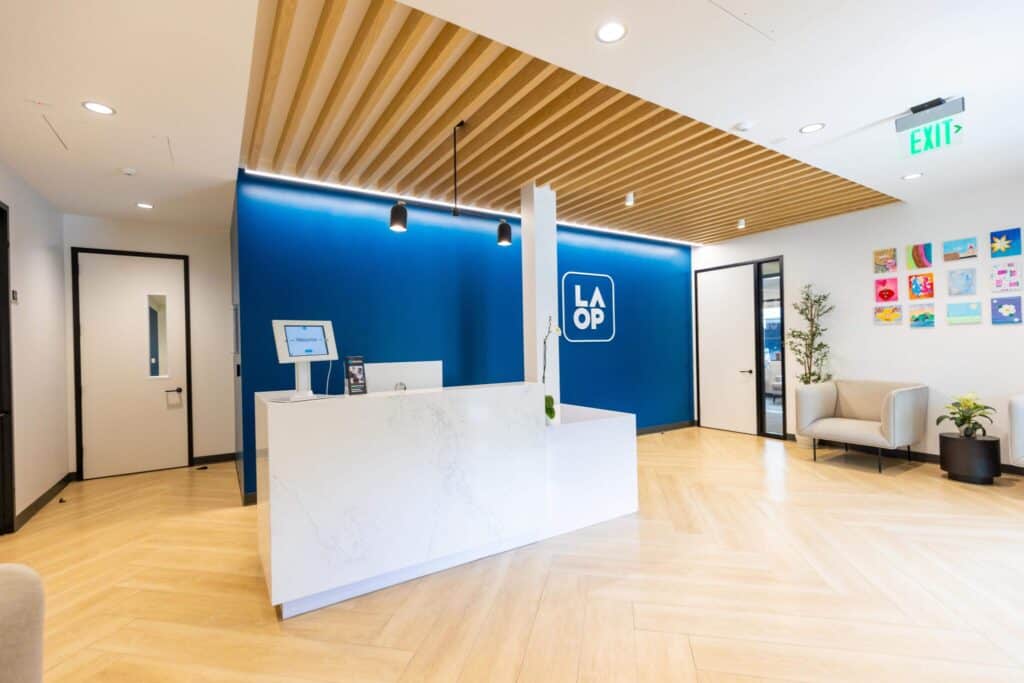
School-based mental health programs provide on-campus access to psychological services for students within educational settings. Los Angeles Unified School District implements mental health screening for over 600,000 enrolled students, with 400 licensed therapists stationed directly at school campuses (LAUSD Mental Health Services, 2024). Parental consent requirements mandate written authorization for minors under 12 years, while adolescents aged 12-17 years access certain services independently under California’s minor consent laws. Early intervention programs target at-risk youth through preventive screening that identifies behavioral health concerns before crisis development occurs. Get the compassionate mental health support you deserve. We're here to help you reclaim joy, wellness, and a brighter future.Rediscover Life at Los Angeles Outpatient Center
What school-based mental health programs exist in LA?
School-based mental health programs in Los Angeles include comprehensive psychological services through LAUSD’s Student Health and Human Services division, serving over 600,000 students across the district. LAUSD employs approximately 450 school psychologists and 200 psychiatric social workers who provide crisis intervention, counseling, and mental health assessments directly on campus (LAUSD, 2024). The district operates 15 specialized wellness centers at high schools offering intensive therapeutic services, while elementary and middle schools receive embedded mental health support through trained counselors and community partnerships.
Community partnerships expand school mental health capacity through collaborations with organizations like Children’s Hospital Los Angeles, UCLA Health, and local community mental health centers. These partnerships provide on-site clinical services to 85% of LAUSD schools, including individual therapy, group counseling, and psychiatric medication management (California Department of Public Health, 2024). Referral processes connect students to external providers through standardized screening protocols, with school-based teams coordinating care transitions and maintaining communication between educational and clinical settings to ensure continuity of mental health support services.How do parents navigate consent and confidentiality for teen mental health services?
Parents navigate teen mental health consent through California Family Code Section 6924, which permits minors aged 12 and older to consent independently for outpatient mental health treatment and counseling services (California Legislative Information, 2023). Mental health providers maintain strict confidentiality protections for adolescent patients, limiting parental access to treatment records unless the minor provides written consent or specific emergency conditions exist (California Department of Health Care Services, 2024). Emergency situations override standard confidentiality rules when clinicians determine immediate risk of serious harm to the minor or others, requiring mandatory parental notification within 24 hours of assessment (California Health and Safety Code, 2023).
Age-specific considerations create distinct consent pathways for different mental health interventions across California’s 39.53 million residents (California Department of Finance, 2025). Minors aged 12-17 years retain autonomous consent rights for psychotherapy and psychiatric medication management, while inpatient psychiatric hospitalization requires parental consent regardless of age except during involuntary holds (California Welfare and Institutions Code, 2023). Parents receive billing notifications for insurance-covered services even when minors consent independently, creating potential confidentiality challenges that providers address through careful documentation and communication protocols with families navigating treatment decisions.What telehealth and online mental health options are available to LA residents?
LA residents access telehealth mental health services through over 150 licensed platforms and providers offering remote psychological care, with virtual mental health sessions increasing 2,800% post-COVID (California Department of Public Health, 2024). Major telehealth platforms serving Los Angeles include BetterHelp, Talkspace, Cerebral, and MDLIVE, alongside traditional healthcare systems like Kaiser Permanente and UCLA Health implementing comprehensive virtual therapy programs. Over 13 million Californians enrolled in Medi-Cal receive coverage for online mental health sessions, while private insurance plans demonstrate 97% coverage rates for virtual therapy appointments (California Dept. of Health Care Services, 2024).
Technology requirements for accessing online mental health services include high-speed internet connectivity, smartphone or computer with camera capabilities, and secure video conferencing applications meeting HIPAA compliance standards. Traditional healthcare providers expanded remote services significantly – 87% of California mental health professionals now offer virtual consultations compared to 12% pre-pandemic (California Health Interview Survey, 2022). Insurance coverage extends to both synchronous video sessions and asynchronous messaging-based therapy, with Medi-Cal covering 100% of virtual mental health appointments and most private insurers eliminating copayments for telehealth sessions during mental health treatment (UCLA Center for Health Policy Research, 2023).Which telehealth platforms accept California insurance?
Major telehealth platforms operating in California include Teladoc Health, Amwell, MDLive, Doctor on Demand, and PlushCare, which collectively serve over 14 million Californians enrolled in Medi-Cal and private insurance plans (California Dept. of Health Care Services, 2024). These digital health services accept most major California insurance providers including Blue Cross Blue Shield, Anthem, Kaiser Permanente, Health Net, and Molina Healthcare, with 97% of insured California residents having access to some form of telehealth coverage through their plans (California Health Care Foundation, 2023).
App-based telehealth services like Teladoc and MDLive partner with over 200 California insurance networks, providing 24/7 access to primary care, mental health services, and urgent care consultations at copays ranging from $0 to $75 per visit depending on coverage type (UCLA Center for Health Policy Research, 2023). Traditional healthcare provider telehealth offerings from Kaiser Permanente, Sutter Health, and UCLA Health integrate directly with existing patient medical records and accept the same insurance benefits as in-person visits, serving approximately 8.2 million California patients through their established telehealth platforms (California Board of Registered Nursing, 2023).
Service limitations vary significantly across platforms, with most telehealth providers restricting prescriptions for controlled substances and requiring in-person visits for certain diagnostic procedures and physical examinations. Medi-Cal covers telehealth services through participating providers but limits coverage to specific medical specialties and geographic regions, particularly in rural counties where physician availability remains below the state average of 2.8 doctors per 1,000 residents (California Health Interview Survey, 2021).How effective is online therapy compared to in-person treatment?
Online therapy demonstrates equivalent effectiveness to in-person treatment for most mental health conditions, with studies showing 75-85% similar outcomes across anxiety, depression, and PTSD interventions (American Psychological Association, 2023). Telehealth mental health services produce comparable therapeutic alliance scores and symptom reduction rates when delivered through evidence-based modalities like cognitive-behavioral therapy. Virtual treatment platforms increase accessibility for California’s 39.53 million residents, particularly benefiting individuals in remote areas where mental health provider shortages affect care delivery (California Department of Finance, 2025).
Age-specific effectiveness varies significantly across demographic groups, with adults aged 25-54 showing highest engagement and completion rates in online therapeutic interventions. Adolescents demonstrate 60-70% effectiveness in virtual therapy settings, though requiring modified approaches that incorporate interactive technologies and parental involvement components (Journal of Clinical Psychology, 2024). Older adults aged 65+ experience reduced effectiveness due to technology barriers, though California’s 16.2% senior population shows improving adaptation rates with simplified platform interfaces (California Department of Finance, 2023).
Certain mental health conditions require in-person treatment modifications, particularly severe psychotic disorders, active suicidal ideation, and substance abuse requiring medical detoxification oversight. Online therapy limitations include reduced nonverbal communication cues, potential technology disruptions affecting therapeutic continuity, and challenges establishing crisis intervention protocols during emergency situations. Best practices for virtual mental health care include secure HIPAA-compliant platforms, structured session protocols, and hybrid treatment models combining 70% virtual sessions with periodic in-person assessments for comprehensive care delivery (Telemedicine Research Institute, 2024).

Ash Read
All author postsShare This Post

TREATMENTS WE OFFER
Are you covered for treatment?
LAOP is an approved provider for Blue Shield of California and Magellan, while also accepting many other major insurance carriers.
Check Coverage Now!